
Starting a lawn in BC means choosing between three main options: lay sod, scatter seed, or hire a hydroseeding crew. Each one works — but they’re not equally suited to every yard, budget, or timeline. Here’s an honest breakdown of all three so you can decide with confidence.
The Short Answer
If you need a usable lawn fast, sod wins. If you have a small, flat, low-traffic area and plenty of patience, seeding is a legitimate budget option. Hydroseeding sits in between — faster than seed, cheaper than sod — but it requires professional equipment and carries more risk than either for residential yards.
What Each Method Actually Is
Grass Seed
The most basic option: you prep the soil, spread dry seed by hand or with a broadcast spreader, and keep it consistently moist until it germinates and fills in. Western Turf Farms carries grass seed if you go this route. It’s DIY-friendly and the cheapest entry point — but the establishment timeline is the longest of the three, and the window for failure is wide.
Hydroseeding
A slurry of seed, water, mulch, and fertilizer is sprayed onto bare soil by a professional crew using specialized equipment. The mulch holds moisture and helps seed germinate faster than dry broadcasting. It’s commonly used on large commercial sites, highway embankments, and sloped terrain. For residential use, it’s faster than hand seeding but still requires weeks of babysitting before the lawn is usable — and you’ll need to hire out, since the equipment is prohibitively expensive to own.
Sod
Mature grass grown on a farm, cut into rolls, and installed directly on your prepared soil. Western Turf Farms grows sod right here in BC — Abbotsford and Langley — and delivers it fresh-cut. You get an instant lawn on day one, with a much shorter establishment window before it’s usable.
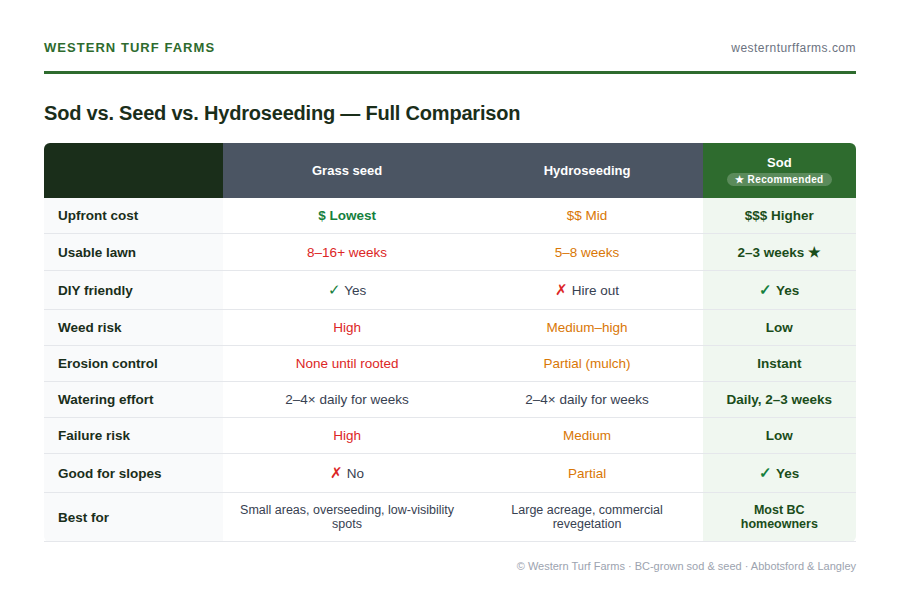
Side-by-Side Comparison
Cost: What You’re Actually Paying For
Seed looks cheap on paper. A bag of grass seed costs very little, and you can spread it yourself. But seed-to-lawn is not a cheap process when you factor in everything honestly:
- Multiple reseeding passes for bare patches (almost guaranteed)
- Daily watering for 8–16 weeks
- Weed control during germination (weeds almost always outcompete new grass)
- The cost of a lawn you can’t use for months
Hydroseeding typically costs less per square foot than sod but more than DIY seeding, and you’re paying a contractor for equipment and labour. It won’t need as many reseeding passes as bare seeding, but it still carries failure risk before roots are established.
Sod costs more upfront. But factor in the shortened establishment window (2–3 weeks vs. 2–4+ months), the dramatically lower weed risk, the erosion protection from day one, and the water savings during establishment — and the total cost picture is closer than the quote comparison suggests. If you’re on a tight schedule (home sale, renovation, landscaping project), the upfront premium often pencils out.
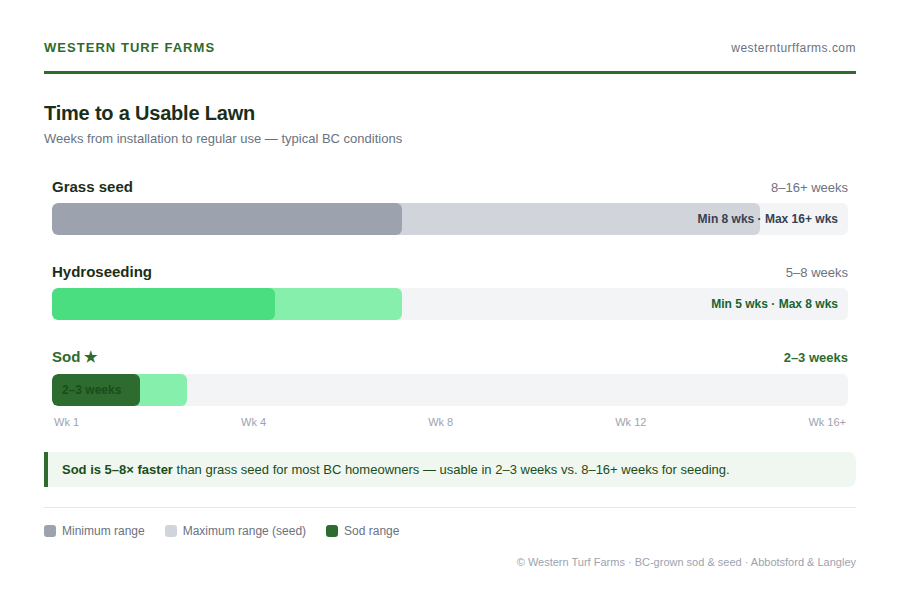
Timeline: When Can You Actually Use Your Lawn?
This is where the gap becomes stark.
- Grass seed: First germination in 7–21 days depending on variety, but you’re looking at 8–16+ weeks before the lawn is dense enough for regular use. Cool, wet BC springs help — but shade, uneven watering, or early weed pressure extend that timeline.
- Hydroseeding: Germination in 5–10 days with ideal conditions. Usable lawn in roughly 5–8 weeks if establishment goes smoothly.
- Sod: Passes the tug-test (roots have grabbed) in 2–3 weeks. Usable for everyday activity (kids, pets, foot traffic) shortly after. Sports or heavy furniture — wait until it’s fully anchored.
Weed Risk
Seed and hydroseeding both germinate in open soil alongside your site’s existing weed seedbank. Weeds typically sprout faster than turf grass and can’t be treated with broadleaf herbicides until the lawn is mature enough to tolerate it — by which point the weeds have a head start. Expect to budget time and money for weed management with either seeding method.
Sod arrives as a dense, mature canopy that shades the soil from day one. It doesn’t eliminate weeds, but it gives them far less opportunity to establish compared to a bare seedbed.
Erosion & Slopes
On any sloped or exposed site, sod is the clear choice. The moment it’s rolled and watered, it acts as a living erosion blanket. Seed — even hydroseeded with tackifier and erosion blankets — remains vulnerable until roots knit. A heavy rainfall during germination can wash everything downslope.
Seasonal Windows in BC
Coastal BC (Lower Mainland, Fraser Valley, Vancouver Island):
- Seed: Best in early spring (March–April) or fall (September–October). Summer heat dries out germinating seed fast.
- Hydroseeding: Same windows. Summer irrigation demand is high.
- Sod: Nearly year-round when soil isn’t frozen or waterlogged. Winter = slower rooting but instant mud control.
Interior BC:
- Seed and hydroseeding: Narrower windows. Late April–June and early September before first frost.
- Sod: Spring through late fall. Morning installs in hot weather; irrigate immediately.
When Each Option Makes Sense
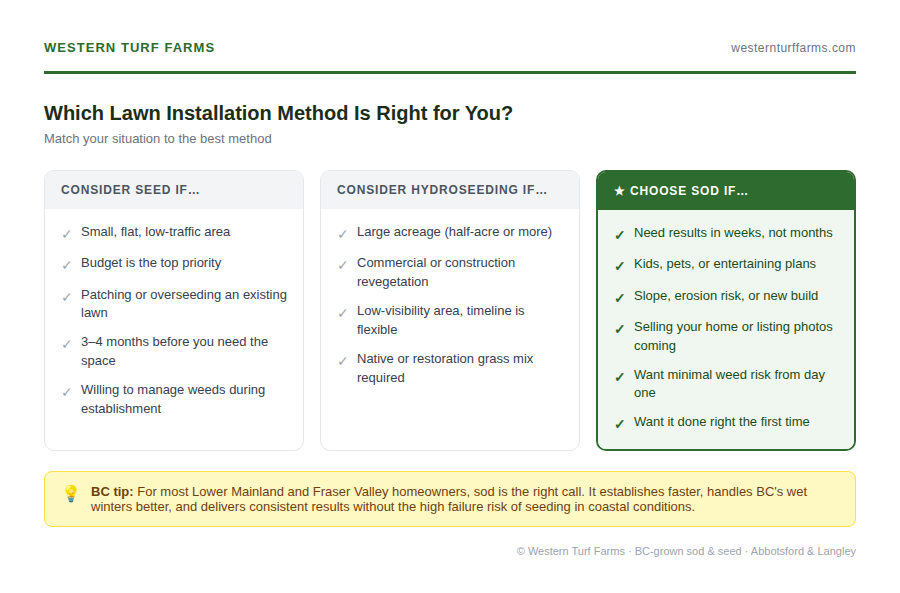
Choose seed if: You have a small, flat, low-traffic area, a tight budget, and 3–4 months to wait. Good for patching bare spots in an existing lawn, or establishing grass in a low-visibility area where timeline doesn’t matter.
Consider hydroseeding if: You have a very large area to cover (think acreage, not a suburban backyard), budget for professional installation, and the time to nurture it. Best suited for large, low-visibility zones, construction site revegetation, or native grass restoration mixes.
Choose sod if: You want a usable lawn in weeks, not months. You have kids, pets, or a project deadline. You’re dealing with slopes, erosion concerns, or a new build with disturbed soil. You want to minimize weed pressure from the start. This is the right choice for most BC homeowners.
Getting Started with Western Turf Farms
Whether you’re buying seed for a DIY project or ordering fresh-cut sod for delivery, Western Turf Farms grows and supplies both from our BC farms in Abbotsford and Langley.
- Use the Sod & Soil Calculator to estimate how much you need
- Get a free quote for delivery and installation
- Questions? Call 604-850-6860 or email sales@westernturffarms.com
Frequently Asked Questions
Is sod more expensive than seeding? Sod costs more upfront per square foot than grass seed. But when you factor in reseeding, extended watering, weed control, and delayed use, the total cost of seeding a lawn is often higher than the quote comparison suggests. For most residential yards, sod delivers better value over the full establishment period.
How long does grass seed take to grow in BC? Expect 7–21 days for first germination and 8–16+ weeks before the lawn is dense enough for regular use. Cool-season grasses like ryegrass germinate faster; bluegrass takes longer. Spring and fall offer the best germination conditions in coastal BC.
What is hydroseeding and is it worth it for a home lawn? Hydroseeding mixes seed, water, mulch, and fertilizer into a slurry that gets sprayed onto bare soil. It’s faster than broadcast seeding but still requires a professional crew and weeks of establishment before the lawn is usable. For most residential yards in BC, sod delivers faster and more predictable results. Hydroseeding makes more sense for large acreage, commercial sites, or difficult terrain.
Can I seed my lawn in summer in BC? It’s not ideal. Summer heat dries out germinating seed quickly, and you’ll need to water multiple times a day to keep the seedbed moist. Spring (March–May) and fall (September–October) are the best seeding windows in coastal BC. If you need a lawn in summer, sod is a better choice.
Does sod need less water than seeding? During establishment, sod and seed both need regular watering — but sod’s high-frequency phase is shorter. Once sod passes the tug-test (typically 2–3 weeks), you can taper to a normal watering schedule. Seeding requires consistently moist conditions for weeks longer, which means more total water and more daily effort.
When should I overseed instead of laying sod? Overseeding — spreading seed onto an existing lawn — is the right call for thinning grass, bare patches in an otherwise healthy lawn, or seasonal renovation. If your lawn is in poor condition overall (compacted, weedy, or poorly established), removing it and starting fresh with sod will give better long-term results.